






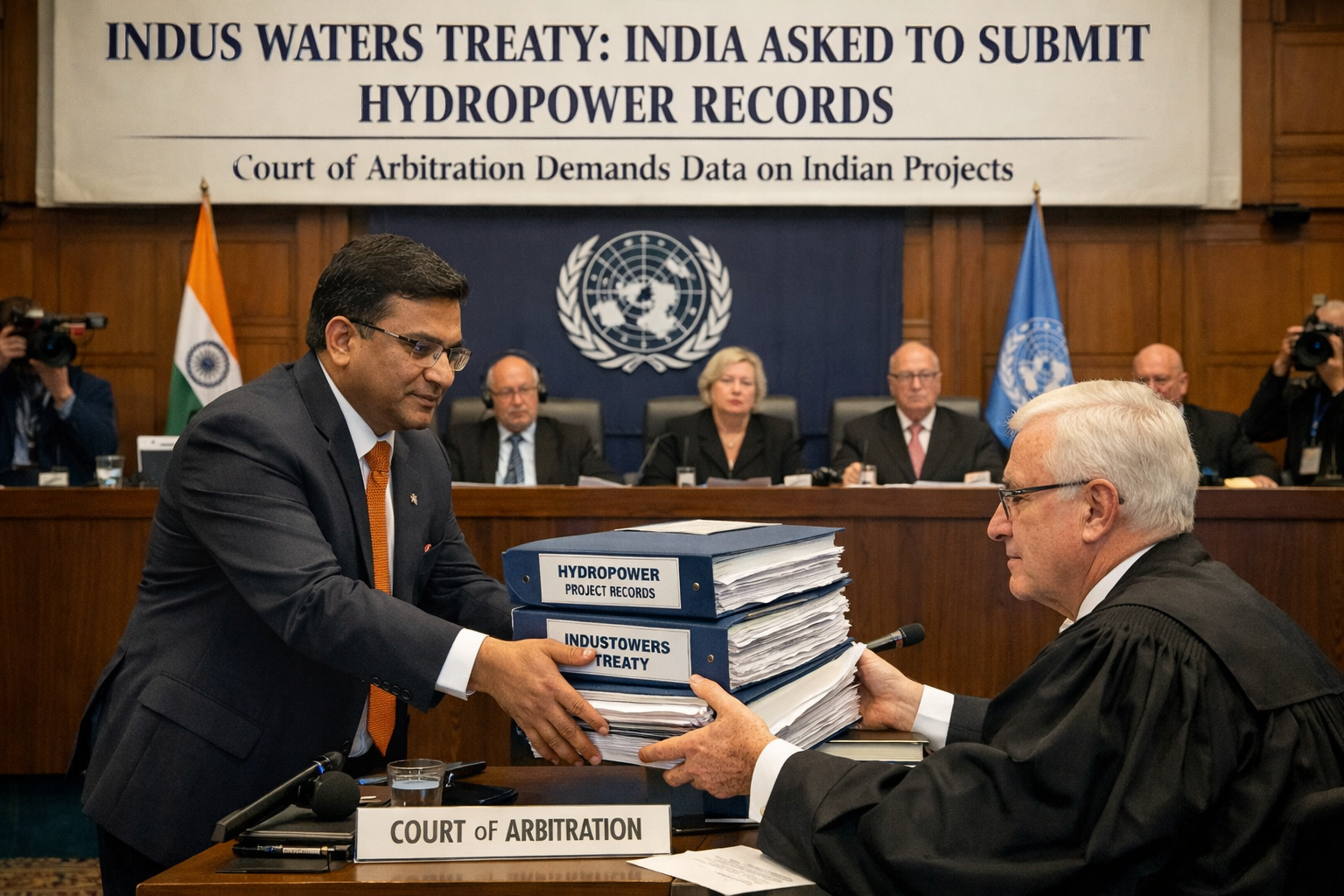
Pakistan has achieved an important procedural milestone in its Indus Waters Treaty dispute with India when the Court of Arbitration ordered New Delhi to submit operational records of two disputed hydropower projects, according to The News on Friday.
The Court of Arbitration, established under the 1960 Indus Waters Treaty (IWT), has issued a 13-page Procedural Order requiring India to submit operational logbooks for the Baglihar and Kishanganga hydropower projects by February 9, 2026, or to formally justify any failure to do so.
Pakistan has been asked to particularize the exact documents that it requires by February 2, 2026. A hearing in the Second Phase on the Merits will take place in The Hague from 2-3 February, irrespective of whether India participates.
A senior Pakistani delegation, headed by the Attorney General and including the Pakistan Commissioner for Indus Waters, will depart for The Hague on 31 January. Pakistan’s international legal team and the ambassador to the Netherlands will also be part of the team.
Pakistan has consistently maintained that India has violated the IWT’s hydropower provisions by overstating installed capacity and projected electricity demand to store excess water, thereby directly affecting Pakistan’s water security.
The court agreed that the operational records, referred to as “pondage logbooks,” appear directly relevant and material to the matters under consideration, particularly in assessing how installed capacity and expected load should be calculated for maximum permissible pondage.
Pakistan has indicated its intention to seek interim measures to avoid further prejudice to its treaty rights, including measures to prevent any action that could aggravate the dispute.
Click Here for More Updates: https://latestnewscenter.com/
Although the court has not yet made any decisions on the interim measures, it is clear that only a court of arbitration, and not the Neutral Expert, has the authority to make such decisions.
According to independent legal experts, this decision is an important procedural victory for Pakistan, as it further solidifies its stance that the actual hydropower activities of India, as opposed to its design, are what need to be assessed in determining treaty compliance