




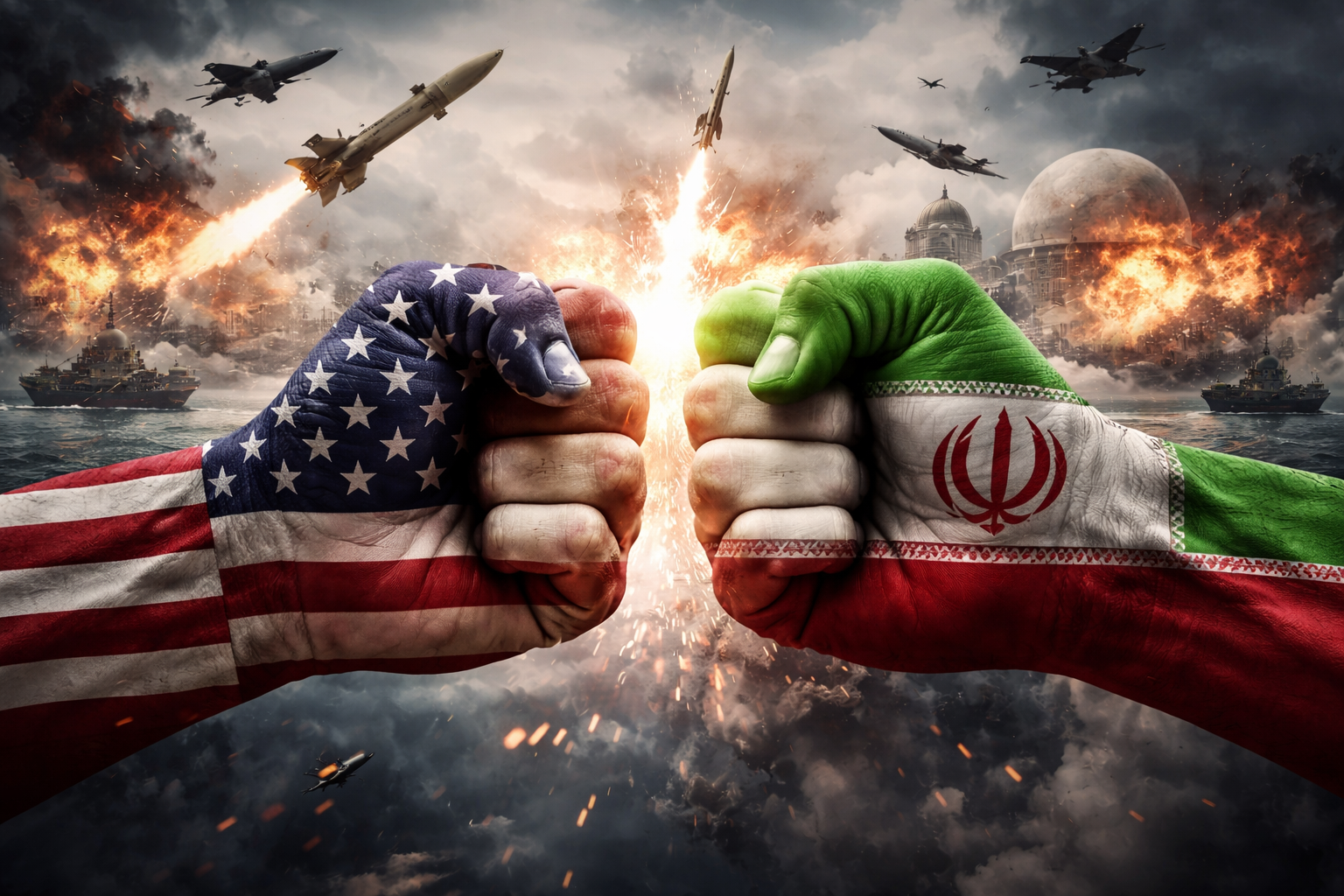
Karachi: Following the June 2025 strikes on Iran’s nuclear facilities, Tehran’s retaliation remained relatively limited. Tehran fired a salvo of missiles at Al-Udeid Air Base located in Qatar, which houses US forces, although it did not result in any deaths.
Iranian leaders have eventually reached the decision to no longer permit attacks in order to avoid a major conflict between themselves and the United States government.
Even though it’s going to be very bad for them, of course, the metric of success for Trump and the metric of success for Iran may be very different.
“Trump might have to destroy the entire state. The Iranians can’t possibly win this war, but they don’t have to. They have to make sure they destroy Trump’s presidency before they go on to lose a war that lasts for several weeks.
Oil prices going through the roof, inflation increasing all over the world, including within the United States, might just destroy Trump’s presidency,” said Hillary Clinton’s running mate of 2016, Mr. Timothy Kaine.
“At least, initially, Iranian officials were prepared to accept both the killing of Soleimani and the attack on nuclear sites because of their limited scope,” Naysan.
However, a limited attack by the US might lead to a stronger reaction by Tehran as the regime feels threatened by the anti-government protests in Iran.
“If the Iranians believe that it’s the beginning of a massive campaign or that the effect on the ground would be adequately galvanising to help bring about another wave of protests, then their desperate situation could lead them to take some very rash decisions,” according to Al Jazeera.
However, if Trump’s objective was to bring about the downfall of the Iranian government, Washington would have liked to utilize “synergy” between protesters and Iranians on the ground and an air campaign by the US military:
However, he pointed out that Trump tends to prefer rapid and decisive military interventions.
“And then you get into potential scenarios where the end game may be a little bit murky,” an analyst said.
“Like, what if you find yourself in a situation of US action, Iranian retaliation, and then further US action, and then the campaign is widened?”
Although there are many risks involved with a military strike against Iran, Iran’s enemies, including many members of Trump’s administration, view this as a historic chance to dismantle the Iranian system.
Since the success of the Islamic revolution in 1979, Iran has faced extreme hard times and lived through wars, sanctions, and internal instability within the country.
The conflict between Iran and Iraq in the 1980s lasted for eight years, claiming the lives of hundreds of thousands of individuals. However, the regime has managed to withstand such events, as well as some protests, economic disputes, and power struggles in the ruling elite.
Nevertheless, the Islamic Republic is now going through the most difficult period in its entire 47-year history, according to several analysts.
Iran has spent many decades building a network of regional countries it could rely upon, known as the “axis of resistance,” but it’s been nearly dismantled.
Hamas and Hezbollah have been dealt heavy blows as a result of the genocidal war unleashed upon Gaza by Israel or its annihilating onslaught on Lebanon in 2024. In Syria, former President Bashar al-Assad was ousted by armed opposition fighters opposed to Iranian rule, who have subsequently gained power.
Even in Venezuela, Iran has lost one of its last remaining allies in Maduro following his arrest.
The Iranian military has seen its potential for deterrence undermined as a result of the destruction of its air defenses by Israel, which declared that it fully dominates the country’s skies last June.
Tehran’s nuclear programme is also adversely affected by these attacks by the US, and Iran is no longer enriching uranium but insists on its right to enrichment.
These external pressures have only been exacerbated by a crippling economic collapse owing to a long period of sanctions. The Iranian money, the Rial, has depreciated significantly, shedding over 90 percent of its value, officially hitting an all-time low.
And, indeed, the protests, which have been followed by a tough security crackdown, are now a crisis in terms of legitimacy for the government.
But I think the ferocity of the response of the state over the past two weeks reflects their realization of their vulnerability, not only in terms of their political legitimacy inside Iran but in their strategic balance in the region and in their relations with the US.
For latest updates: https://latestnewscenter.com/